
Dental Bridge: The Perfect Solution for Missing Teeth
Dental bridges are an ideal way to replace missing teeth. Learn more about the different types of dental bridges, their advantages, and how they can improve your oral health.

Why Dental Bridges are the ideal choice for closing gaps
Dental bridges are a proven method to close gaps between teeth and restore both the function and aesthetics of your smile. At the Zahnklinik Wien Döbling, we offer customized dental bridge solutions tailored to your individual needs.
What are Dental Bridges?
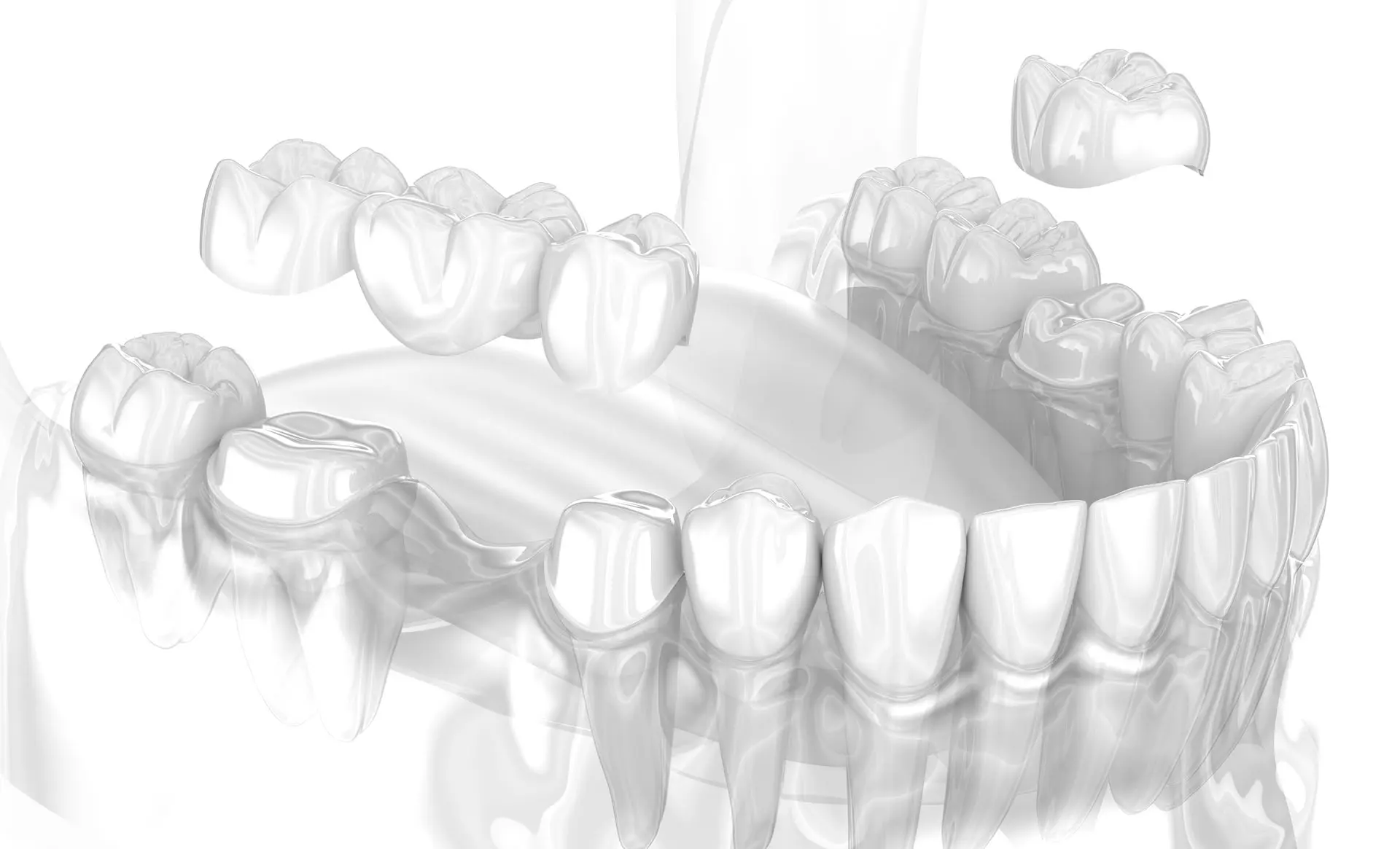
Dental bridges are fixed restorations used to replace one or more missing teeth. They consist of several connected crowns that are anchored to adjacent teeth or implants.
Importance and benefits of Dental Bridges
Dental bridges help improve chewing efficiency and speech, maintain the natural aesthetics of your smile, and prevent neighboring teeth from shifting. They provide a long-lasting and stable solution for missing teeth while supporting overall oral health.
Types of Dental Bridges
The most common types include bridges anchored to adjacent teeth and cantilever bridges supported only on one side. Particularly advantageous are implant-supported ceramic bridges, which are anchored to artificial tooth roots and provide a long-term, stable solution without stressing the neighboring teeth. They impress with their natural aesthetics and high biocompatibility, making them an ideal choice for patients seeking a durable and aesthetic restoration.
01.
Implant-Supported Bridges
Implant-supported bridges are securely anchored to dental implants that are fixed into the jawbone. They offer an extremely stable and long-lasting solution that closely resembles natural teeth. One of the greatest advantages of this method is the preservation of neighboring teeth, as they do not need to serve as support pillars. Furthermore, implant-supported bridges help prevent bone loss by stimulating the jawbone similarly to natural tooth roots. Thanks to their strong anchorage, they provide excellent stability and functionality comparable to natural teeth. In addition, their aesthetic adaptability allows them to match the color, shape, and appearance of natural teeth, ensuring a harmonious smile. With proper care, implant-supported bridges can last for many years — often even decades.
02.
Cantilever Bridges
Cantilever bridges are anchored on only one side and “hang” freely over the tooth gap. Compared to implant-supported bridges, they have several disadvantages. Their stability is lower since the load on the single supporting tooth is significantly higher. Moreover, they do not stimulate the jawbone, which may lead to bone resorption over time. Because of these characteristics, cantilever bridges are generally less durable and robust than implant-supported bridges.
03.
Traditional Dental Bridges
Traditional dental bridges are anchored to natural teeth that serve as abutments. These teeth usually need to be reshaped to make room for the bridge.
Book your consultation online →Materials for Dental Bridges
Suitable Materials
Dental bridges can be made from a variety of materials, each offering specific properties and advantages. The most commonly used materials include all-ceramic, metal-ceramic, and metal alloys. The choice of material depends on several factors, such as the patient’s aesthetic preferences, the position of the bridge in the mouth, and individual health conditions. All-ceramic dental bridges provide an excellent aesthetic solution with high biocompatibility. Metal-ceramic bridges combine strength with an appealing appearance, while metal alloys are especially durable and biocompatible but less suitable for visible areas.
All-Ceramic
All-ceramic dental bridges are made entirely of ceramic and offer outstanding aesthetic and functional qualities. One of their main advantages is their natural appearance — ceramics closely mimic the color and translucency of natural teeth, making them ideal for the front tooth area. Additionally, ceramics can be perfectly matched to the shade of surrounding teeth, ensuring a harmonious and seamless integration into the smile.
In terms of biocompatibility, all-ceramic dental bridges are particularly advantageous because they contain no metal components, eliminating the risk of allergic reactions — an important benefit for patients with metal sensitivities. Ceramics are also gentle on the gums and reduce the risk of irritation or inflammation compared to metal-based materials.
Functionally, all-ceramic bridges offer high stability and strength similar to natural enamel. Modern high-performance ceramics are extremely robust and resistant to chewing pressure, making them a long-lasting solution. They are also less prone to plaque buildup and decay, as their smooth, non-porous surface makes it difficult for bacteria to adhere.
Single Implant vs. Dental Bridge
The choice between a single dental implant and a dental bridge depends on several factors, including oral health, financial considerations, and individual patient needs. A detailed consultation with your dentist will help determine the best solution for your specific situation.
When is a Single Implant the Better Option?
A single implant is particularly suitable when only one tooth needs to be replaced (a single gap) and the adjacent teeth are healthy. In such cases, the implant replaces the missing tooth without affecting the neighboring teeth. This is important for maintaining natural tooth structure and ensuring long-term oral health. However, implants can only be placed if there is sufficient bone available — otherwise, a bridge is the recommended alternative.
Advantages and Disadvantages of Single Implants and Dental Bridges
Here’s a comparison of the advantages and disadvantages of single implants and dental bridges to help you decide which solution best suits your needs.
A single implant is ideal when only one tooth is missing and the adjacent teeth are intact. Its main advantage is that it preserves neighboring teeth — they do not need to be filed down or altered. In addition, the implant helps prevent bone loss by stimulating the jawbone, maintaining its structure over time. This stability and durability make single implants a long-term solution. While implants can sometimes be more cost-effective in the long run, the treatment duration is longer since the bone needs time to integrate with the implant.
Dental bridges, on the other hand, offer a faster treatment option. They can often be completed within 24 hours, making the process more efficient. However, this method requires grinding down the adjacent teeth, which weakens their structure and increases the risk of decay or other complications. Bridges are also more difficult to clean and do not stimulate the jawbone, which may result in bone loss over time in the area of the missing tooth.

Our In-House Dental Laboratory
Our in-house dental laboratory allows us to produce dental bridges quickly and with exceptional precision. Close collaboration between our dentists and dental technicians ensures optimal fit and outstanding quality. Using state-of-the-art technologies such as intraoral scanners and CAD/CAM systems, we guarantee that every bridge fits perfectly and meets the highest aesthetic standards. Thanks to our efficient workflow, we can often design and place custom-made dental restorations within just 24 hours.

The Treatment Process
In the following section, you’ll learn everything you need to know about the treatment process for dental bridges. We’ll explain each step — from the initial consultation and digital impression to the fabrication and placement of the dental bridge in our in-house laboratory. These precise and carefully coordinated procedures ensure that your dental bridge fits perfectly and provides you with a healthy, confident smile for years to come.
Initial Consultation and Examination
The treatment process for dental bridges begins with a comprehensive consultation and thorough examination. Your entire dental structure, including teeth and jawbone, is carefully assessed to determine the ideal treatment plan. X-rays are taken to provide an accurate diagnosis and ensure precise planning of your dental bridge.
Digital Impression and Preparation – Using an Intraoral Scanner
Depending on the type of bridge, two teeth may be prepared as abutments. Instead of traditional impressions, the Zahnklinik Wien Döbling uses advanced intraoral scanners. These devices create highly detailed 3D images of your teeth and oral cavity, allowing for precise planning and fabrication of the bridge. This method is more comfortable for patients, eliminates the gag reflex, and provides faster, more accurate results. After tooth preparation, a temporary bridge is placed to protect the abutment teeth and maintain both function and aesthetics until the final all-ceramic bridge is ready.
Fabrication of the Dental Bridge in Our Laboratory
The digital impressions are transferred to our in-house dental laboratory, where the bridge is produced using CAD/CAM technology (Computer-Aided Design and Computer-Aided Manufacturing). This advanced process ensures a highly precise and customized fit. Close collaboration between our dentists and dental technicians guarantees optimal results in terms of both function and aesthetics.
Placement and Adjustment of the Bridge
Once the dental bridge is completed, it is placed during a follow-up appointment. The fit and bite are checked carefully, and minor adjustments are made if necessary. After fine-tuning, the bridge is permanently fixed using a special dental cement, ensuring a secure hold and immediate functionality.
Care and Aftercare
Proper care and aftercare are essential to ensure the longevity of your dental bridge. Regular toothbrushing with a soft toothbrush, along with the use of dental floss or special interdental brushes, helps remove plaque and food particles. Maintaining thorough oral hygiene is key to keeping your gums healthy and preventing decay. Regular dental check-ups are crucial to monitor the condition of your bridge and detect potential issues early. Professional cleanings further help maintain your bridge and prevent complications such as inflammation. With our structured and precise treatment process, we ensure that your dental bridge is not only aesthetically pleasing but also highly functional and durable.
Author
Dr. Matthias Göstel
Dentist, Medical Director
Dental Clinic Vienna Döbling
20.09.2025
We’re here for you!

Phone
You can reach us Monday to Friday from 8 a.m. to 6 p.m. to schedule an appointment by phone.
01 320 97 97 →
Online Booking
You can also conveniently book your appointment online — anytime, day or night.
Book Appointment Online →
Feel free to send us a short, informal email — we look forward to hearing from you!
office@zwd.at →Frequently Asked Questions (FAQs) about Dental Bridges
Here you’ll find answers to the most common questions. If you have any further questions, you’re welcome to contact us anytime and schedule a consultation.
We’re available Monday to Friday from 8 a.m. to 6 p.m. at 01 320 97 97 . You can also conveniently use our online appointment booking. We look forward to your visit!
A dental bridge is a prosthetic restoration used to replace one or more missing teeth. It consists of artificial teeth (pontics) anchored by crowns on adjacent natural teeth or implants, closing the gap visually and functionally. A special type is the ceramic bridge, made entirely of ceramic for a particularly aesthetic solution.
A dental bridge closes the gap of one or more missing teeth. It is attached to neighboring teeth or implants, forming a stable structure that restores chewing and speaking ability. Ceramic bridges combine this stability with a highly natural look.
Implant-supported bridges: anchored on implants for a permanent and stable solution.
Traditional bridges: attached to adjacent natural teeth serving as anchors.
Ceramic bridges: made completely of ceramic for superior aesthetics.
Cantilever bridges: used when only one adjacent tooth is available for support.
Durability: long-lasting and highly stable.
Protection of natural teeth: no need to grind down neighboring teeth.
Bone preservation: implants stimulate and maintain jawbone structure.
Require grinding of neighboring teeth.
May be less durable than implant-supported bridges.
Do not stimulate bone, which can lead to bone loss over time.
Cantilever bridges are attached to only one adjacent tooth.
They offer limited stability and are not suitable for every type of tooth gap.
Metal: strong and durable but less aesthetic.
Ceramic: natural-looking and aesthetically pleasing.
Full ceramic: biocompatible and provides the most natural appearance — ideal for front teeth.
Natural aesthetics: mimic real teeth in color and translucency.
Biocompatibility: gentle on gums and suitable for allergy sufferers.
No discoloration: ceramic does not stain like other materials.
Initial consultation and examination: the dentist creates a personalized treatment plan.
Tooth preparation and scanning: the supporting teeth are shaped, and a digital 3D scan is taken using an intraoral scanner.
Laboratory fabrication: the bridge is produced in the in-house dental lab using CAD/CAM technology.
Placement and adjustment: the finished bridge is tried in, adjusted, and permanently cemented.
The cost depends on material, type of bridge, and treatment complexity. Implant-supported bridges are typically more expensive but offer added benefits such as durability, bone preservation, and long-term stability. We’ll provide a personalized cost estimate after consultation.
With proper care and regular check-ups, a dental bridge — especially a ceramic one — can last many years, often decades.
Brush daily with fluoride toothpaste.
Use dental floss or interdental brushes to clean between teeth and under the bridge.
Attend regular check-ups and professional cleanings.
Avoid very sticky or hard foods that could damage the bridge.
A temporary bridge is used while the final bridge is being made. It protects the prepared teeth and maintains appearance and function.
Dental bridges are permanently cemented using specialized dental adhesives for a secure, long-lasting bond.
Loosening or detachment: often due to decay or weak bonding.
Gum inflammation: caused by poor oral hygiene.
Fractures or cracks: from trauma or chewing hard objects.
Yes — a dental bridge allows you to eat most foods just as you would with your natural teeth.
A bridge is anchored to neighboring teeth, while an implant is placed directly in the jawbone. Implants are more permanent, whereas bridges (especially ceramic ones) are faster and often more cost-effective.
When a permanent solution is desired.
When sufficient bone is available.
When bone preservation is important.
When adjacent teeth are healthy and should remain untouched.
Implant placement in the jawbone (bone grafting if needed).
Healing phase to allow osseointegration.
Attachment of crown to complete the restoration.
Quality control: every step under direct supervision.
Precision: customized, accurate fit, especially for ceramic bridges.
Speed: faster fabrication and same-day adjustments.
Maintain excellent oral hygiene.
Schedule regular dental check-ups and cleanings.
Avoid chewing on hard objects or teeth grinding.
While a bridge cannot be repaired once cemented, it can be replaced. Implant-supported bridges may be repairable, but replacement is often the more reliable option.
A dental bridge should be examined at least twice a year during routine dental check-ups.

