
Dental Implants: Permanent Tooth Replacement
Dental implants offer a long-lasting and aesthetic solution for missing teeth. At Dental Clinic Vienna Döbling, we use state-of-the-art technology and work with experienced dentists to provide you with the best possible tooth replacement. Discover the benefits, treatment process, and aftercare of dental implants — and bring back your confident smile.

Dental implants – more than just tooth replacement
Dental implants are an innovative and long-lasting solution for missing teeth. They not only enhance the aesthetics of your smile but also support the functionality and overall health of your jaw.
What are Dental Implants?
Dental implants are artificial tooth roots that are surgically placed into the jawbone in a minimally invasive procedure. They serve as a stable foundation for dental restorations such as crowns or bridges.
Usually made of biocompatible titanium or ceramic, dental implants provide a durable solution for missing teeth and help maintain the natural bone structure of your jaw.
The Importance and Benefits of Dental Implants
Dental implants are not only aesthetically pleasing but also highly functional. They restore a natural chewing sensation, improve speech clarity, and prevent bone loss in the jaw.
In addition, they offer a long-term and reliable solution for tooth replacement — helping you smile and eat with confidence again.
Structure of a Dental Implant
A dental implant consists of three main components: the implant, the abutment, and the crown. Together, they create a stable and aesthetically pleasing solution for missing teeth.
01.
Implant (Artificial Tooth Root)
The implant is the central part of the dental implant system. It is surgically placed into the jawbone and serves as an artificial tooth root. Usually made from biocompatible titanium, it is well accepted by the body and provides a strong, durable foundation for the replacement tooth. This component ensures stability, durability, and long-term functionality.
02.
Abutment (Connector Piece)
The abutment is a small connector that is attached to the implant once it has fully integrated with the jawbone. It extends through the gum and acts as the support for the dental crown. Each abutment is custom-made to ensure a perfect fit and a secure connection between the implant and the crown.
03.
Crown (Tooth Replacement)
The crown is placed on top of the abutment. It is usually made from high-quality ceramic or other aesthetic materials. Ceramic crowns offer a natural look, excellent function, and long-lasting durability. Each crown is individually crafted to match the color, shape, and size of your natural teeth — blending seamlessly with your smile.
Plan your personal consultation online now →Benefits of Dental Implants
Discover the many advantages of dental implants as a long-lasting solution for missing teeth.
01.
Improved Aesthetics
Dental implants offer a natural and aesthetically pleasing tooth replacement that blends seamlessly with your smile.
02.
Greater Comfort
Unlike removable dentures, dental implants are firmly anchored in the jawbone, providing exceptional comfort and a feeling that’s almost identical to natural teeth.
03.
Long-Term Durability
Known for their longevity and reliability, dental implants can last a lifetime with proper care and regular dental check-ups.
04.
Preservation of Jawbone Structure
By stimulating the jawbone during chewing, dental implants help prevent bone loss and maintain the natural shape of your face.
Book your consultation now →Requirements for Dental Implants
Learn about the essential requirements for dental implants to ensure a long-lasting and successful tooth replacement.

General Health Requirements
For a successful dental implant procedure, patients should be in good overall health. Certain chronic conditions — such as diabetes or cardiovascular diseases — can increase the risk of complications and may require special evaluation before treatment.

Jawbone Requirements
Adequate bone density and height are crucial for the stability of dental implants. In cases of bone loss, a bone augmentation (bone grafting) procedure may be necessary to create a solid foundation for the implant.

Lifestyle and Oral Care Habits
A healthy lifestyle and excellent oral hygiene are vital for the long-term success of dental implants. Smoking can slow down healing and increase the likelihood of implant complications, so maintaining good daily care routines is highly recommended.
Indications for Dental Implants
Find out in which cases dental implants can be used and how they provide a long-lasting, reliable solution for tooth replacement.
01.
Single Tooth Replacement
Dental implants are ideal for replacing a single missing tooth without affecting the surrounding teeth, unlike traditional dental bridges. They restore both function and aesthetics with a natural-looking result.
02.
Multiple Missing Teeth
For patients with several missing teeth, dental implants can serve as anchors for bridges or partial dentures, ensuring a stable and comfortable fit. This approach offers excellent chewing function and a natural feel.
03.
Full Arch Restoration
In cases of complete tooth loss, dental implants provide a secure foundation for full dentures. They ensure a strong bite, improved comfort, and significantly enhanced quality of life.
Plan your personal consultation online now →Dental Implant Procedure
Learn how the dental implant procedure is performed to provide a long-lasting and reliable solution for missing teeth.
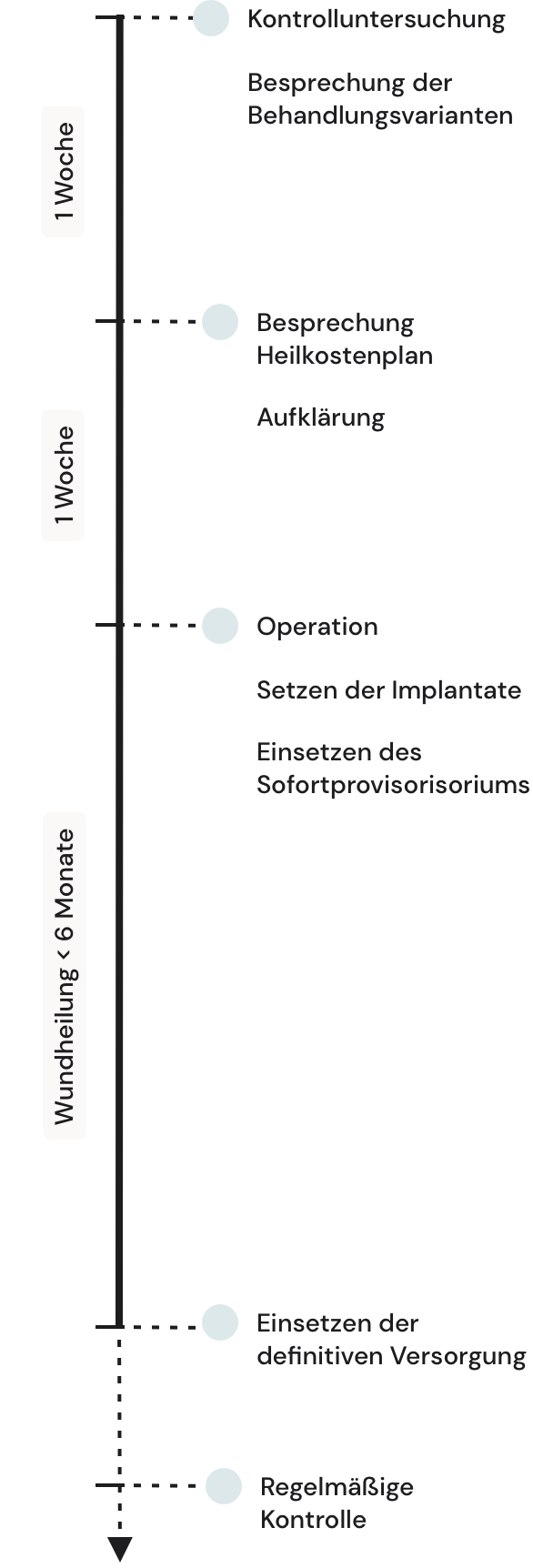
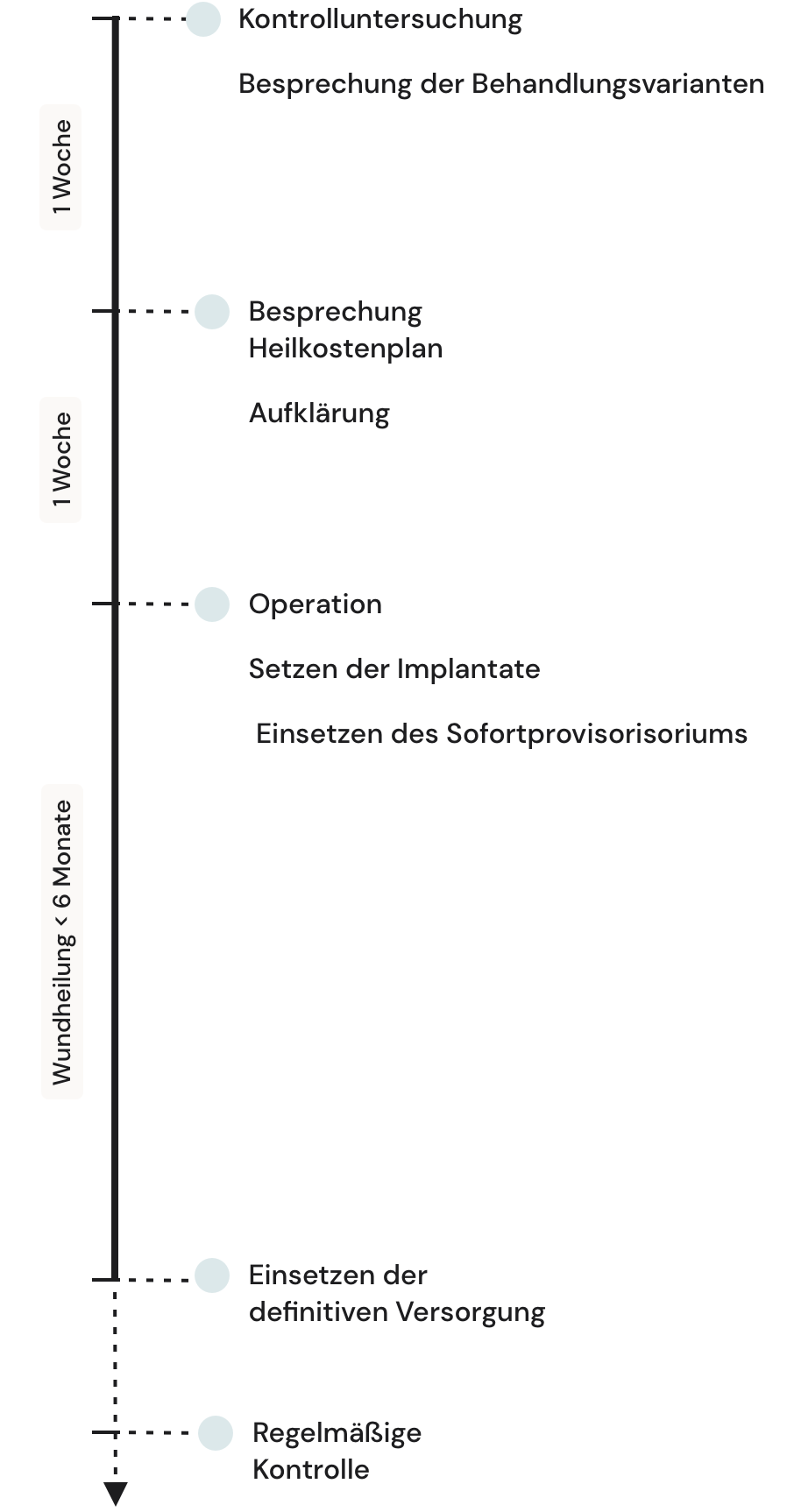
Initial Examination and Treatment Planning
A thorough preliminary examination and treatment plan are essential for the success of dental implant placement.
A healthy jawbone is crucial for implant stability. Using 3D cone beam computed tomography (CBCT), we can precisely assess bone quality and plan any necessary bone augmentation.
You will also receive a detailed treatment and cost plan, providing full transparency about your expected expenses.
Jawbone Preparation
If the bone volume is insufficient, we use advanced imaging technology such as CBCT scans to create a detailed 3D representation of your jaw.
This allows for accurate backward planning, where the ideal position of the tooth is determined first, and the implant is then precisely planned based on that position.
Implant Placement
The implant — a small titanium or ceramic screw — is placed into the jawbone under local anesthesia or general sedation.
Using computer-guided navigation and backward planning, we ensure predictable results, shorter surgery times, minimal swelling, and faster recovery.
After placement, the healing phase begins, during which the implant fuses with the bone (osseointegration).
Healing Phase
The healing process typically takes several months.
During this time, the implant firmly integrates with the jawbone, forming a stable foundation for the dental restoration.
Proper aftercare, including prescribed medication and antiseptic mouth rinses, supports healing and reduces the risk of infection.
Attaching the Final Restoration
Once healing is complete, the final restoration is placed.
An abutment (connector piece) is attached to the implant, followed by a custom-made, high-quality ceramic crown.
Thanks to our in-house dental laboratory and modern CAD/CAM technology, we ensure a perfect fit, excellent aesthetics, and long-lasting results.
Aftercare and Regular Check-Ups
Aftercare plays a vital role in the long-term success of dental implants.
Regular follow-up appointments at Dental Clinic Vienna Döbling are important to monitor the condition of the implant and surrounding tissues.
Right after the procedure, the surgical area should be cleaned gently with a soft toothbrush and treated with care to promote proper healing.

Care and Maintenance of Dental Implants
Proper oral hygiene is essential to prevent infections and inflammation around the implant area. This includes regular tooth brushing and the use of dental floss or interdental brushes to keep the spaces between teeth and implants clean.Routine check-ups with your dentist are equally important to monitor the condition of the implant and surrounding gum tissue, allowing any potential issues to be detected early. With consistent home care and professional dental cleanings, dental implants can last a lifetime — helping you maintain excellent oral health and a confident smile.
Author
Dr. Matthias Göstel
Dentist, Medical Director
Dental Clinic Vienna Döbling
05.10.2025
We’re Here for You!

Phone
You can reach us Monday to Friday from 8:00 AM to 6:00 PM to schedule your appointment by phone.
01 320 97 97 →
Online Booking
Prefer to book online? You can schedule your appointment conveniently anytime, 24/7, using our online booking system.
Book an appointment online →
Feel free to send us a short and informal email — we look forward to hearing from you!
office@zwd.at →Frequently Asked Questions (FAQs) About Dental Implants
Here you’ll find answers to the most common questions about dental implants. If you have any additional questions, feel free to contact us or book a consultation.
We’re available Monday to Friday, 8:00 AM – 6:00 PM at 01 320 97 97, or you can use our online booking system at any time. We look forward to hearing from you!
Dental implants are artificial tooth roots placed into the jawbone to replace missing teeth.
They are usually made of titanium or ceramic and provide a stable foundation for dental restorations.
With proper care and regular dental check-ups, dental implants can last a lifetime.
Their durability and longevity are among the main reasons they are considered a reliable, long-term solution for missing teeth.
The procedure is performed under local anesthesia or general sedation, so you won’t feel pain during the surgery. After the procedure, you may experience mild to moderate discomfort, which can be managed with pain medication. Most patients report that any discomfort subsides within a few days.
As with any surgical procedure, there are certain risks, including infection, swelling, or bleeding.
In rare cases, implant rejection can occur. Early detection and treatment of any complications are essential for a smooth healing process.
The cost of dental implants varies depending on individual needs and the scope of treatment. You’ll receive a detailed cost estimate after your consultation and initial examination. Keep in mind that the long-term benefits and durability of implants make them a worthwhile investment.
The entire process can take several months, depending on your healing time and individual situation. Typically, the osseointegration (healing) phase lasts between 3 to 6 months, after which the final crown is attached.
Coverage depends on your individual insurance plan. In many cases, costs are partially reimbursed, but it’s best to check directly with your insurance provider or supplemental insurance.
In most cases, yes — as long as certain health conditions are met. A good overall health and sufficient jawbone density are key factors. At Dental Clinic Vienna Döbling, you’ll receive a thorough examination to determine if implants are the right solution for you.
Dental implants should be cared for just like natural teeth: brush regularly, use floss or interdental brushes, and attend routine check-ups. Professional cleanings help remove plaque and keep your gums and implants healthy.
The examination includes a comprehensive dental check-up, X-rays, and 3D cone beam computed tomography (CBCT) to assess your bone structure. These diagnostics allow for precise implant planning and placement.
Healing typically takes 3 to 6 months, depending on your individual situation. During this period, the implant integrates with the jawbone, forming a stable base for your restoration.
Alternatives include bridges and removable dentures. While bridges are anchored to neighboring teeth, dentures rest on the gums. However, dental implants usually offer the best combination of aesthetics, comfort, and durability.
Yes — but any existing conditions, such as gum disease (periodontitis), must be treated first. Good oral health is essential for implant success, and your dentist will ensure all issues are resolved before proceeding.
No, the implant itself is hidden within the jawbone. The visible part is the dental crown, which looks and feels just like a natural tooth.
Implants are typically made of biocompatible titanium or ceramic, which are very well tolerated. Allergic reactions are extremely rare, but any known allergies should be discussed with your dentist during your consultation.
Regular follow-ups every six months are crucial for implant longevity.
Your dentist will check the condition of the implant, surrounding tissue, and bite alignment.
Maintain excellent oral hygiene, visit your dentist regularly, and lead a healthy lifestyle. Avoid smoking and excessive alcohol consumption to support healing and long-term success.
Yes — there are special toothbrushes, floss, and interdental brushes designed for implants. These tools help maintain cleanliness and reduce the risk of inflammation or infection.
Yes, smoking reduces blood flow to the gums and bone, which can delay healing and increase the risk of complications. It’s strongly advised to stop smoking before and after your implant procedure.
Yes, dental implants are possible for patients with well-controlled diabetes. With proper management, diabetic patients have similar success rates as non-diabetics. Your dentist will assess your health and adapt the treatment accordingly.
Yes. Dental implants stimulate the jawbone while chewing, helping to preserve bone density and prevent bone loss. This also supports a natural facial structure and a youthful appearance.
Most patients can return to work after a few days, depending on their recovery and job type. It’s recommended to rest for a couple of days to support proper healing.
After implant placement, a healing phase follows in which the implant fuses with the bone. Some mild swelling or discomfort is normal and can be easily managed with medication. Once healing is complete, your final crown will be attached, and you can enjoy your new smile.
Before your procedure, you’ll have a comprehensive consultation and examination at Dental Clinic Vienna Döbling. Your overall health and medical history will be reviewed, and a personalized treatment plan will be created. Be sure to answer all medical questions honestly for the best results.

